CADE Newlsetter – October/November 2025
Civil society in action: CADE’s October–November round-up 2025
Dear colleagues,
Welcome to the latest edition of the CADE newsletter, where we share what we’ve been working on to make digital governance more inclusive, equitable, and rights-based, including:
- supporting civil society participation at ICANN84
- highlighting recent work across Africa, the MENA region, Latin America, and South Asia
- discussing our Mapping and Baseline study findings with stakeholders
- launching our Capacity Development Programme for CSOs.
This edition also offers a preview of what comes next for our network, and how CSOs from any region can be (more) involved in CADE. Dive in!
HIGHLIGHT
Grounding DNS discussions in real-world experience: Civil society at ICANN84
When conversations about internet infrastructure take place, they can easily drift into abstractions: protocols, layers, systems, policies. Yet the effects of those decisions are anything but abstract. They reach communities whose access to information, ability to document events, and day-to-day use of the internet depend on how that infrastructure is governed.
During ICANN84’s NCSG Discussion on DNS Blocking and Human Rights, two civil society organisations – the Arab Center for Social Media Advancement (7amleh), represented by Jalal Abukhater, and the Iraqi Network for Civil Society for Digital Rights (INSM), represented by Hayder Hamzoz – contributed perspectives that anchored the session firmly in lived experience.
Their interventions reminded us that DNS-level measures operate not in theory, but in our homes, workplaces and civic spaces affected by conflict, surveillance, political pressure, and sudden disconnection.
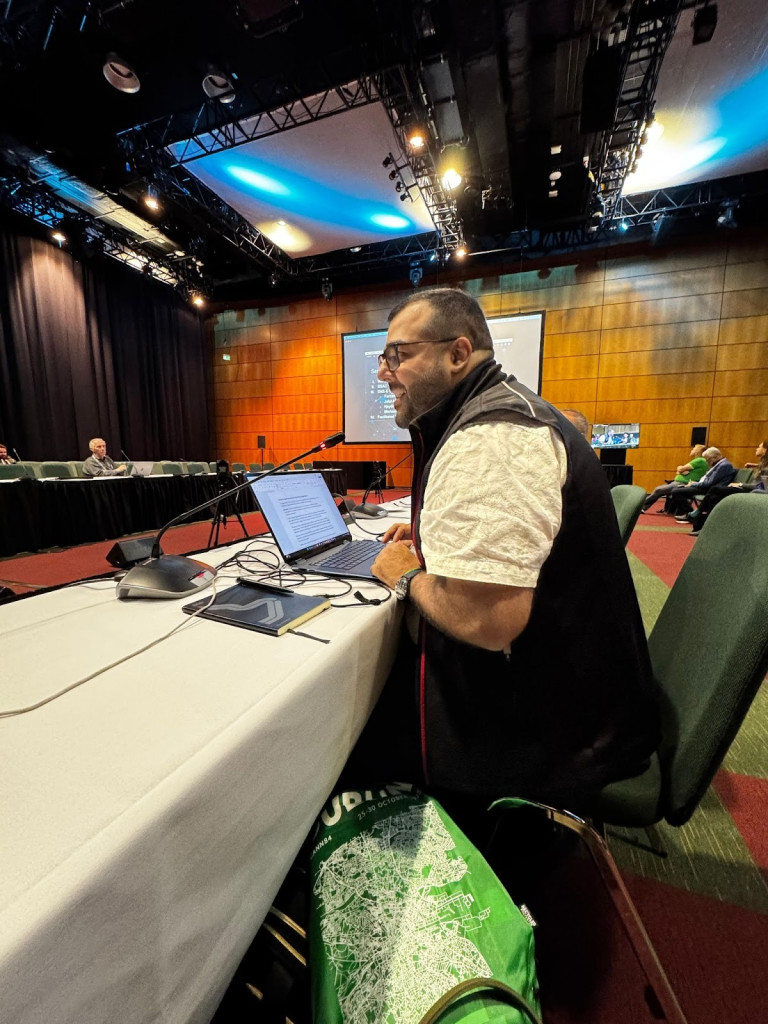
Credit: Lia Hernández, Fundación Karisma
For instance, Abukhater (speaking online) outlined how, in the Palestinian context, control over ICT infrastructure is inseparable from the conditions of occupation. He described the structural lack of sovereignty over telecommunications, where international gateways, spectrum and routing remain under external authority. This creates an environment in which throttling, DNS blocking and full service blackouts are technically feasible and have been repeatedly deployed.
Abukhater also explained how domain restrictions have affected Palestinian human rights organisations. Some have faced hosting limitations or risks of de-platforming linked to sanctions regimes far outside the region. His account made clear that actions taken at the DNS level can have consequences that outpace their ostensibly narrow technical scope.
Joining in person, Hamzoz described a different but equally complex digital environment. He explained how cybercrime legislation, vague in its definitions, has facilitated the blocking of news outlets and social media pages. He detailed patterns of large-scale internet shutdowns, imposed on a national scale during exam periods, and the growing use of GPS jamming that disrupts everyday digital mobility.
In relation to DNS blocking specifically, he noted proposals to restrict access to major public DNS resolvers, which would expose users to security vulnerabilities and enable more intrusive forms of monitoring. His examples demonstrated how DNS-level interventions can rapidly extend into broader forms of control affecting journalists, activists and ordinary users alike.
Together, these contributions clarified why civil society participation in internet governance forums is simply essential. Actors such as 7amleh and INSM bring first-hand understanding of how infrastructure decisions manifest on the ground. Their insights make visible the human impact of domain suspensions, DNS filtering and other interventions that can otherwise appear purely technical.
By connecting policy debates to lived experience, CSOs help ensure that discussions around technical infrastructure remain rooted in the realities that communities face. Their presence strengthens the relevance of global processes, broadens the evidence base for decision-making, and reinforces the importance of safeguards, transparency and accountability in any DNS-related action.
The participation and engagement of 7amleh and INSM at ICANN84 Annual General Meeting, held in Dublin, Ireland, 25–30 October 2025, was supported by CADE – Civil Society Alliances for Digital Empowerment, an initiative co-funded by the European Union, and ICANN’s Non-Commercial Stakeholders Group (NCSG). Mentoring and guidance was provided by ECNL, with the assistance of Fundación Karisma, SMEX, and DiploFoundation.
🌍 REGIONAL HIGHLIGHTS
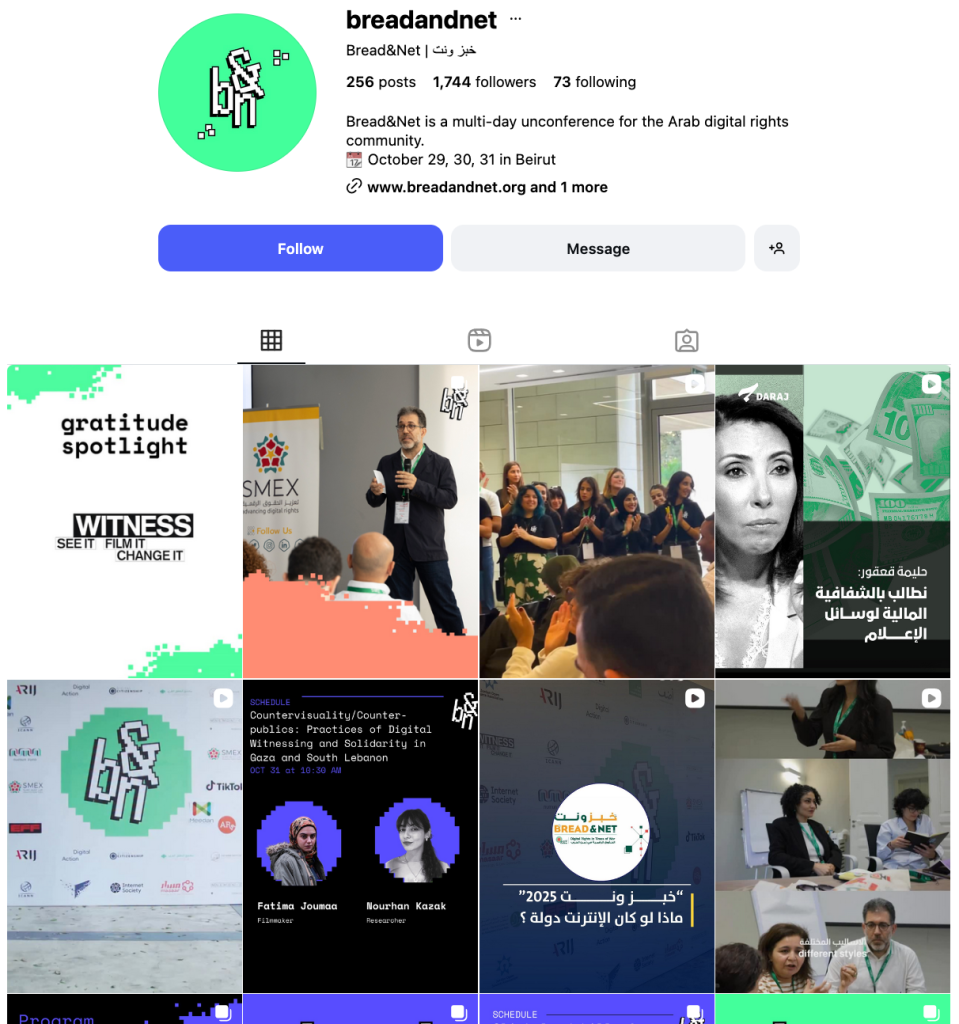
Bread&Net returns to MENA as a face-to-face gathering
After two years online, Bread&Net returned to Beirut with renewed energy, drawing more than 550 participants from across the region. The gathering, organised by SMEX, once again became a regional meeting point for technologists, policymakers and activists to reconnect, exchange experiences, and explore the fast-shifting landscape of digital rights.
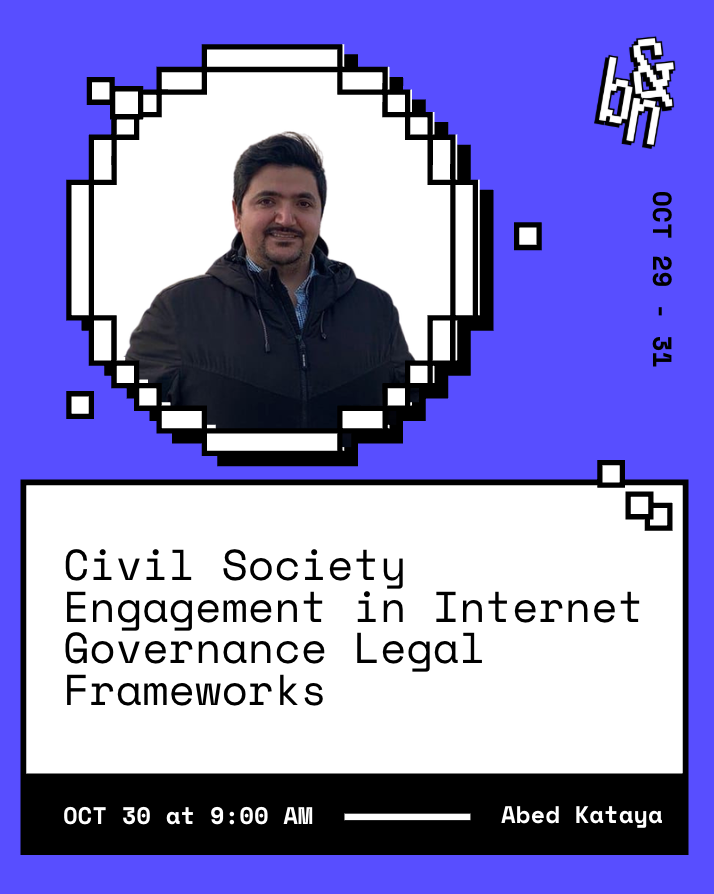
From our end, SMEX’s Abed Kataya led a discussion around SMEX’s regional case study for CADE on cybercrime legislation and civil society engagement in internet governance, offering a clear picture of how legal frameworks in the region are evolving, and how CSOs are responding to these shifts.
Kataya also led an engaging workshop on introducing key internet governance concepts in Arabic, helping participants navigate institutions, processes and decision-making spaces that often feel distant from regional realities. The session provided a practical entry point for newcomers and deepened understanding among those already working in digital rights.
Check out Bread&Net’s Instagram page for more.
Your Clicks, Your Rights: What everyone should know about digital power and online freedoms
Forus has launched Your Clicks, Your Rights, a 10-episode multilingual video series that explores how digital technologies and policies shape human rights, equity, and inclusion.
Each video breaks down key issues – from online freedoms and cybersecurity to AI ethics and gender justice – through real-world examples from Latin America, Africa, and the MENA region. Watch the first episode here.
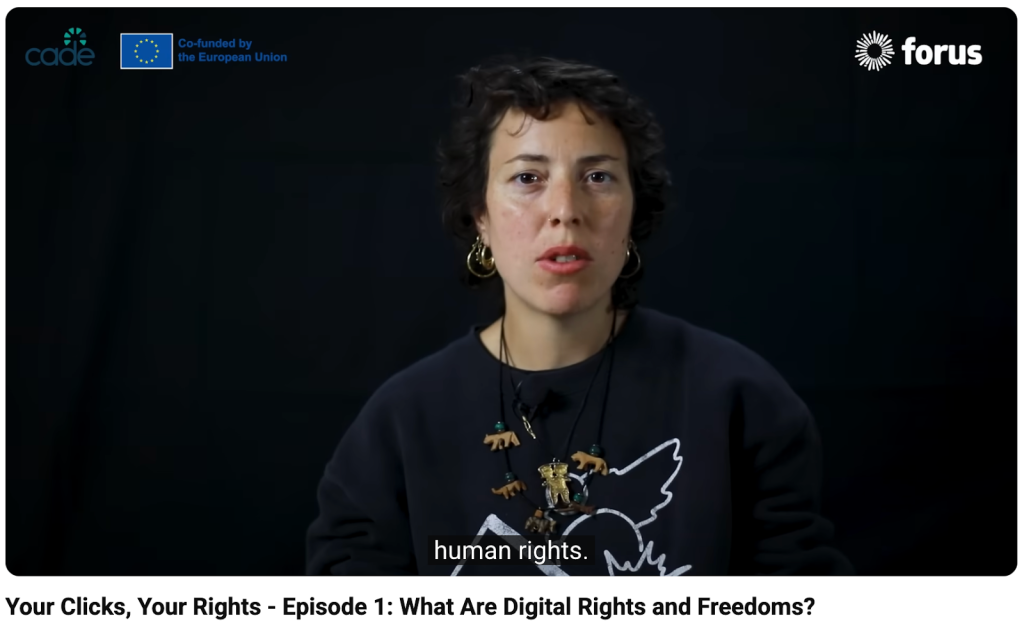
first episode of ‘Your Clicks, Your Rights’
New assessment highlights Rwanda’s digital rights landscape ahead of fourth UPR cycle
CIPESA has released a new assessment of Rwanda’s digital rights environment as the country enters its fourth Universal Periodic Review (UPR) cycle. The review, produced by CIPESA (with CADE’s support) and the Association for Progressive Communications (APC), highlights broad issues around digital inclusion, data governance, and online freedoms. (CIPESA will now deliver its statement on Rwanda next week – more on this further down).
The review draws on desk research and stakeholder consultations in Rwanda, and on another submission prepared jointly by CIPESA with the Pan African Lawyers Union (PALU) to gauge progress on previous UPR recommendations. Earlier this year, CIPESA teamed up with West Africa ICT Action Network (WICTA) for a joint submission on digital rights in Liberia, which included recommendations for promoting press freedom and strengthening the digital civic space in Liberia.
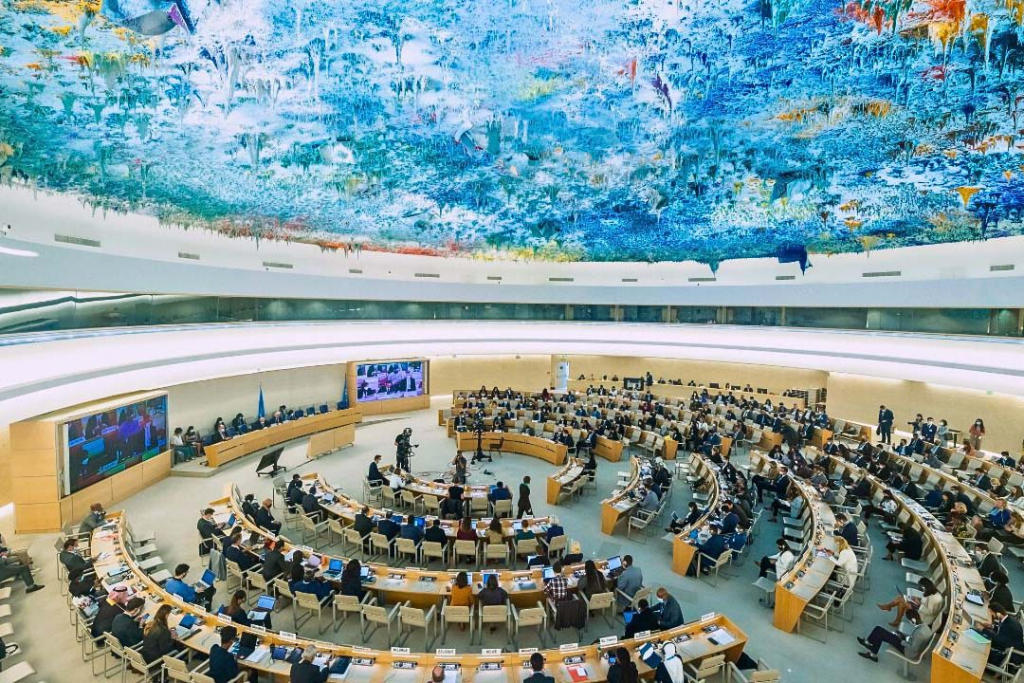
The UPR is one of the UN Human Rights Council’s most important mechanisms for assessing how states uphold their human rights obligations, offering civil society a rare, structured opportunity to shape national commitments on issues that increasingly intersect with digital technologies. Its value lies not only in generating state recommendations, but also in creating space for civil society to surface emerging challenges, share evidence and build alliances across national, regional and global levels.
Towards WTDC-25: Kenya convenes multistakeholder dialogue on ICT development
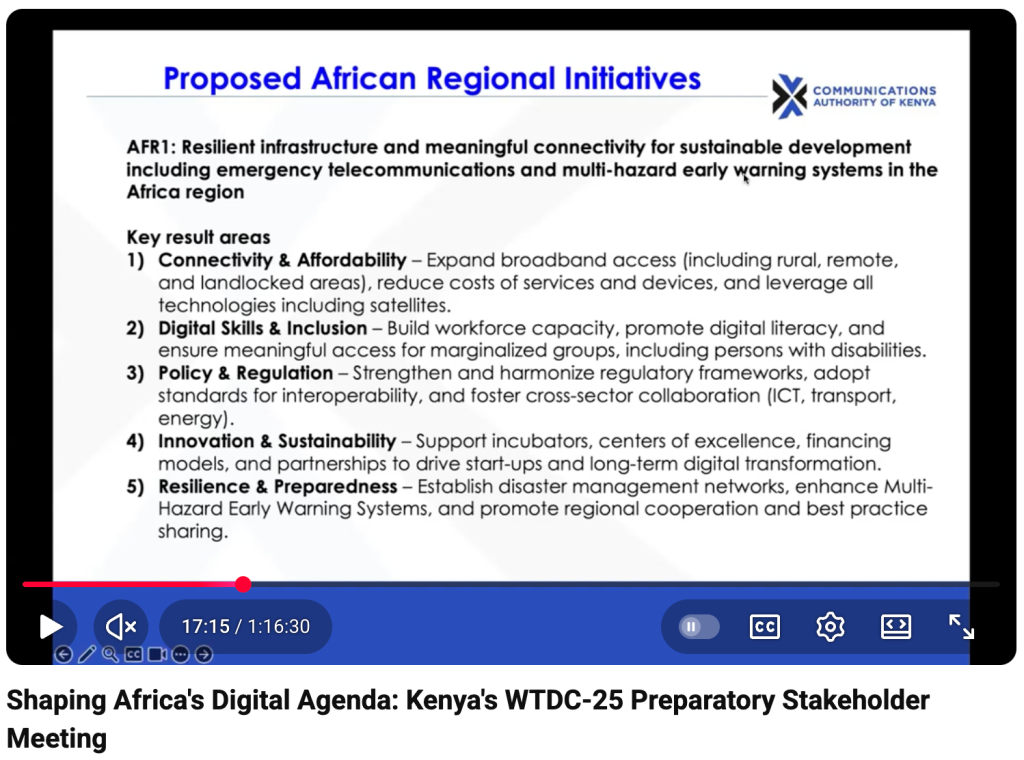
KICTANet and the Kenya Communications Authority recently hosted an online preparatory meeting to start shaping national and regional priorities ahead of the (ongoing) World Telecommunication Development Conference (WTDC-25). The session, themed ‘Towards WTDC-25: Shaping Regional Priorities for Africa’s Digital Development’, was part of Kenya’s preparations for the ITU conference taking place in November 2025 in Baku, Azerbaijan.
During the webinar, held on 2 October, stakeholders looked at key ICT development needs for Kenya and the Eastern Africa sub-region and discussed how to strengthen multistakeholder input as Kenya develops its position for WTDC-25. If you missed the webinar, watch the recording here.
Fundación Karisma brings youth voices and gender perspectives to LACIGF
At this year’s Youth LACIGF and the LACIGF (4-7 November, Córdoba, Argentina), Fundación Karisma helped spark important conversations around gender and internet governance. Their side session, ‘Searching for a Gender Perspective for Internet Governance’, brought together civil society members to reflect on why gender matters in these debates, where the discussion stands today, and what obstacles still need to be tackled.
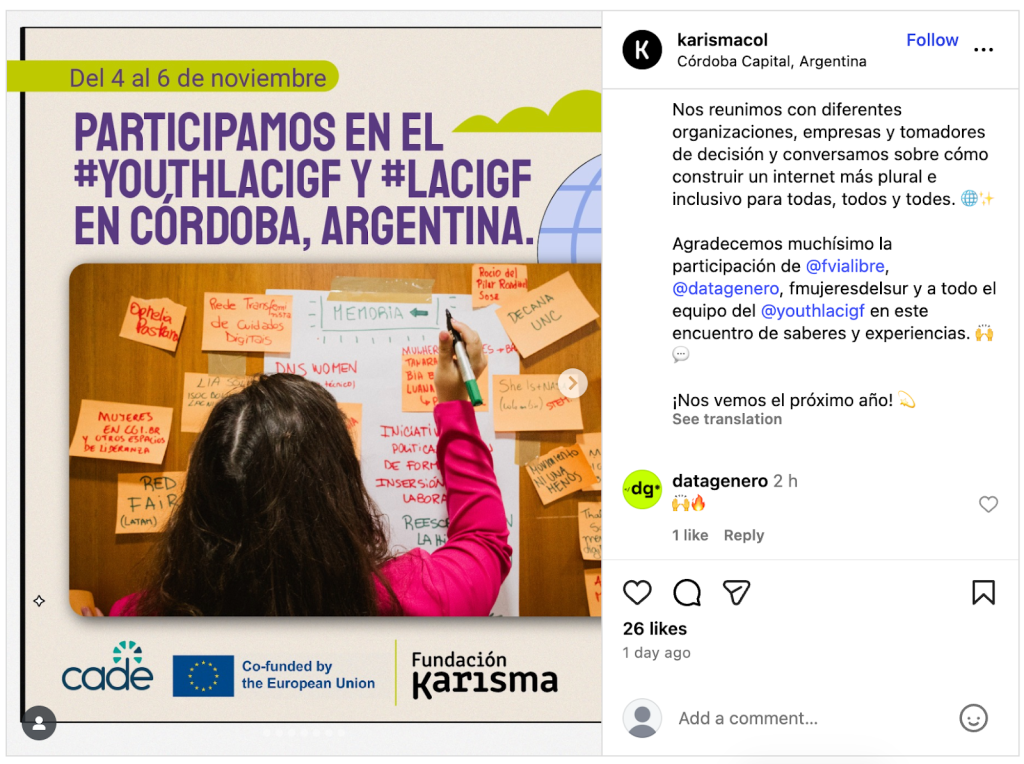
Karisma also joined the panel ‘Internet Shutdowns by Legal, Judicial, and Administrative Orders: Regulatory Challenges and Needs’, sharing early insights from their regional case study on internet shutdowns (another CADE study, which is coming soon).
In addition, earlier in the week, Karisma’s pre-event for newcomers to the Youth LACIGF, ‘Survival Kit for Your First LACIGF’, offered practical guidance and helped young people from civil society connect and feel more confident ahead of the in-person meeting.
For resources (and photos!), visit Karisma’s Instagram page.
📖 RESOURCES
Who gets a seat at the table? CADE’s study reveals who’s participating – and who isn’t
Civil society’s role in shaping the internet is often talked about – but rarely mapped. On 2 October, we unveiled a comprehensive study examining where CSOs are present in some of the most influential digital policy spaces – ITU, ICANN, IETF, and the IGF – as well as where they are still missing, and why the gap matters.
One of the clearest insights is that the landscape remains uneven. The presence of civil society is most visible at the IGF, where openness and accessibility have long been integral to the forum’s design. But in spaces such as ICANN, ITU and the IETF, many organisations still struggle to move from the margins into meaningful, sustained participation. Funding gaps, complex procedures, and language barriers continue to hinder progress, even for experienced groups.
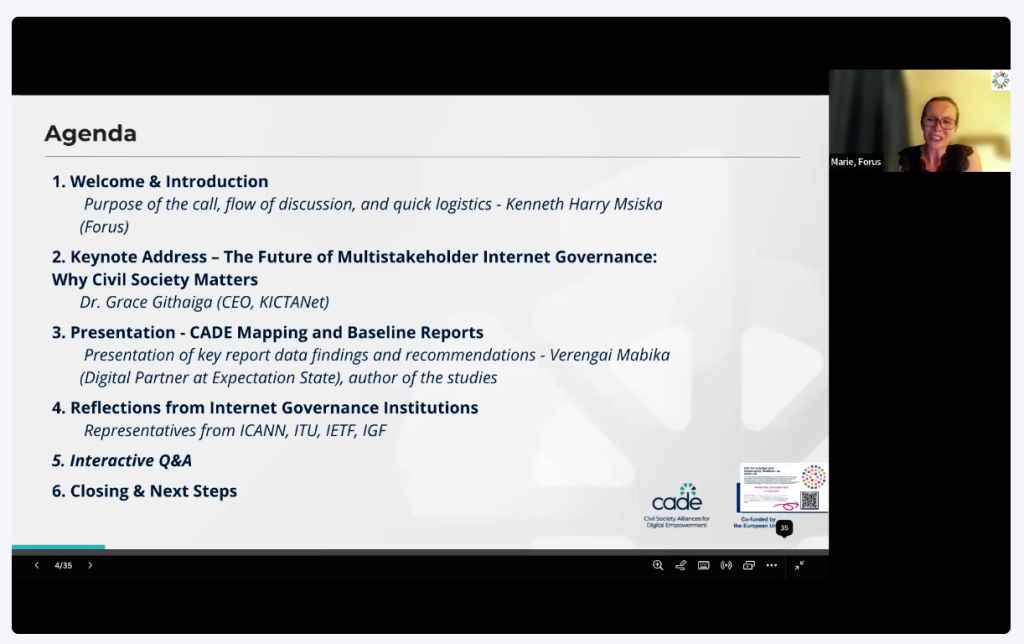
At the launch, organised by Forus, these findings sparked a wide-ranging conversation about what it will take to make digital governance genuinely inclusive. Participants spoke candidly about the challenges they face when entering highly technical spaces, and the need for practical support mechanisms – mentorship networks, regional hubs, long-term funding and multilingual resources – that can help civil society navigate these systems with confidence.
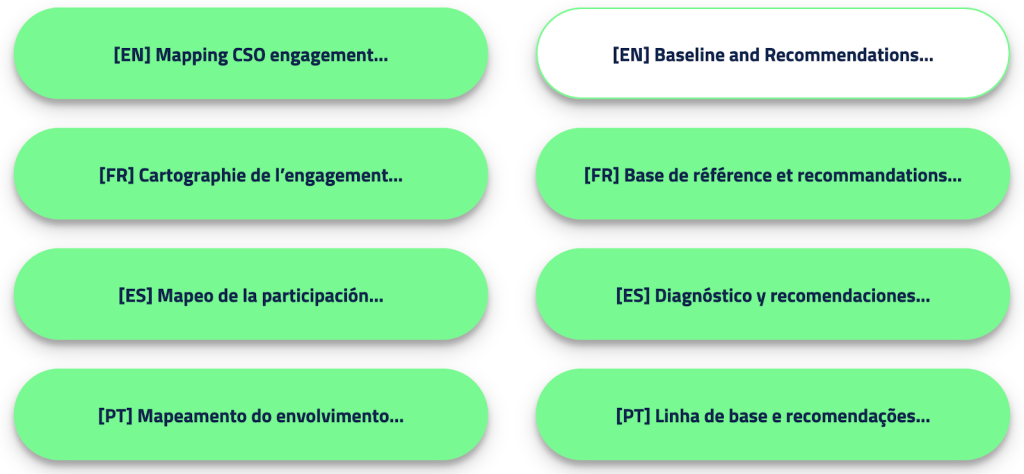
The Mapping and Baseline studies, available in English, Portuguese, Spanish, and French, offer a foundation for understanding where civil society stands today – and how to strengthen its role in the digital governance spaces that shape the internet’s future.
📅 COMING UP
27 November: Civil society input at the UN Human Rights Council
Later this month, the Universal Periodic Review (UPR) process will again place digital rights on the agenda. As part of the UPR’s 51st Pre-Session (26–28 November), two CADE partners will present stakeholder reports (developed jointly with APC – the Association for Progressive Communications): CIPESA, on human rights in the digital context in Rwanda, and SMEX, on digital rights in Lebanon.
CIPESA and SMEX will deliver their interventions on 27 November at the Palais des Nations in Geneva.
5 December: Deadline to apply for CADE’s Capacity Development Programme for CSOs 2025–2026
CADE invites civil society organisations working on digital policy, particularly from the Global South, to apply for the 2025–2026 Capacity Development Programme for CSOs. The call for applications now runs until 5 December 2025.
The programme, developed and delivered by DiploFoundation, will take place between December 2025 and May 2026. It will combine two learning tracks:
- The first focuses on technical knowledge through online courses on internet governance, infrastructure and standards, cybersecurity policy, or AI policy and practice.
- The second track builds diplomatic and negotiation skills for more effective participation in multistakeholder forums.
The ten most engaged participants will be considered for a study visit to Geneva. Priority will be given to CSOs from the Global South, especially women-led groups and those working on inclusion, accessibility, and youth issues. Learn more and apply.
The programme is funded by the European Union and developed and delivered by DiploFoundation for CADE. Full scholarships will be awarded to the selected participants.
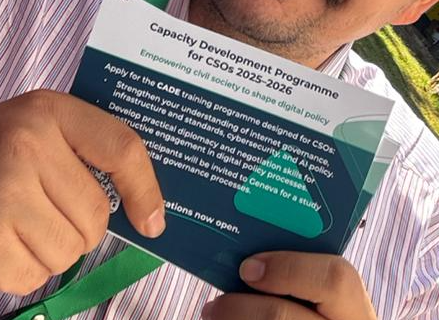
CADE’s Capacity Development Programme for CSOs 2025–2026
closes on 5 December 2025. Apply now!
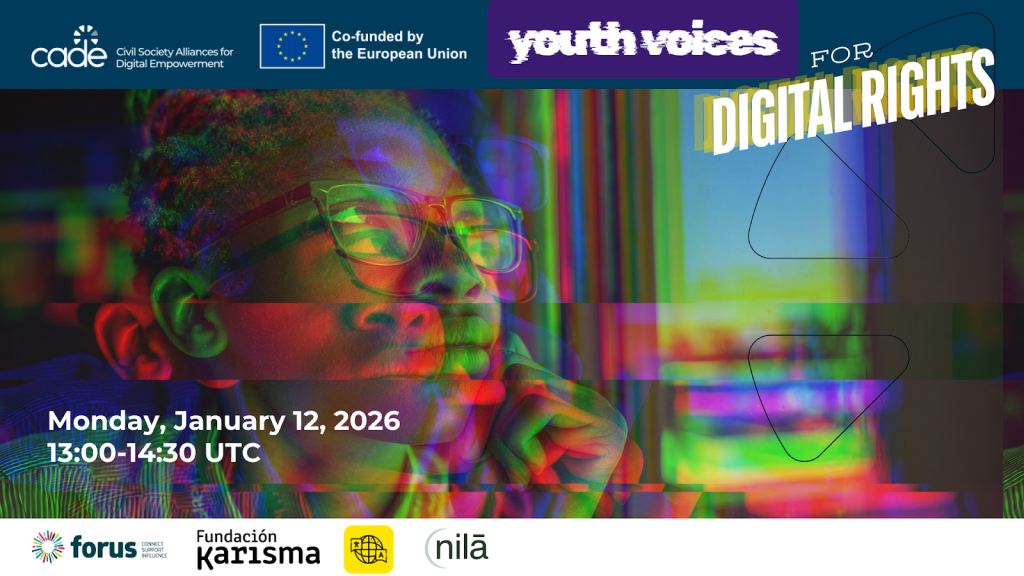
12 January 2026: CADE’s Youth Voices for Digital Rights initiative invites you to a virtual open house
Younger generations live in a world where most aspects of their lives are recorded as data. They use digital platforms more than any other age group and feel the impact of emerging technologies most directly. Yet, their perspectives are often overlooked in internet governance debates, and their rights are not always considered.
Over the past four months, CADE’s Youth Voices for Digital Rights initiative, led by Forus in partnership with Fundación Karisma, brought together 15 young advocates from Africa, Asia, Latin America, and Europe to learn, collaborate, and take action on digital rights.
The initiative will culminate in a virtual open house that will launch the Youth Manifesto on Digital Rights, accompanied by participants’ creative multimedia projects, which tell their unique stories about digital rights from around the world.
Save the date – 12 January 2026, from 13:00 to 14:30 UTC – and register to join the virtual open house. The event will be simultaneously interpreted in English, French and Spanish.
Forward this newsletter to colleagues who may be interested. If this newsletter was forwarded to you, sign up for our next issue.
This publication was co-funded by the European Union. Its contents are the sole responsibility of CADE and do not necessarily reflect the views of the European Union.