CADE Newsletter – May/June 2026
| ⭐ IN FOCUS |
From users to builders: Civil society takes on AI
What does it look like when civil society stops waiting for AI to happen to them – and starts building it themselves?
CADE’s AI Policy and Practice course for CSOs, delivered by Diplo, offered participants a chance to find out. The course combined lecturer-led discussions on AI governance with something less common: a hands-on practical strand where each participant designed, built, and trained their own AI assistant using MyDepartment, Diplo’s in-house AI tool. No prior technical background was required – just curiosity, a policy focus, and a problem worth solving.
The process was as important as the product. Working through data curation, employing prompt engineering, and fine-tuning their models, participants got inside the mechanics of how AI systems work – and where they might mislead. Understanding how training data shapes responses, or how a poorly worded prompt could produce a confident but wrong answer, isn’t abstract for civil society practitioners. It’s the difference between using a tool thoughtfully and using it blindly.
The chatbots that participants built reflect the diversity of the CADE community’s work and the gaps they see in existing tools.
One participant focused on AI governance from a Global South perspective, training their assistant on policy documents, regional human rights frameworks, and civil society positions from across the Global South. The goal: a centralised, advocacy-ready resource that explores the demands and recommendations of Global South civil society – not as a footnote to global discussions, but as the main subject.
Another built an assistant centred on AI governance in Africa, drawing on African Union frameworks, national AI strategies, and data protection laws across the continent, with a deliberate emphasis on socioeconomic realities and human rights rather than commercial interests. Civil society in Africa is navigating a fast-changing policy landscape with limited dedicated tools. This attempts to improve that scenario.
A third tackled disability inclusion in AI policy by developing an assistant designed to help users understand and apply AI governance, with a strong focus on accessibility, non-discrimination, and rights. The tool draws comparisons between developed and developing country contexts – a perspective that is frequently missing from mainstream AI governance conversations.
A fourth participant built a multilingual assistant on AI and disinformation, covering information integrity and synthetic media. Uniquely, the tool is designed to detect the query’s language and respond in kind – a practical choice for a field where English-language resources dominate but the problems are everywhere.
And one built a youth-centred policy advocacy assistant, designed to support a civil society coalition in navigating legislative and policy developments, drafting briefing notes, and engaging government institutions and international bodies – all through a lens of youth participation and human rights.
Across all the tools, a common thread emerged: Participants weren’t building for novelty. They were building to fill a gap they had identified through their own advocacy work. That’s civil society doing what it does best – identifying a need and responding to it.
CADE’s Capacity Development Programme for CSOs 2026–2027, delivered by Diplo, is open for applications. Read more and apply
| 🌍 UPDATES |
Bringing civil society to the table in Brussels
What does it look like when civil society and EU institutions sit down together to discuss digital rights and the future of digital cooperation?
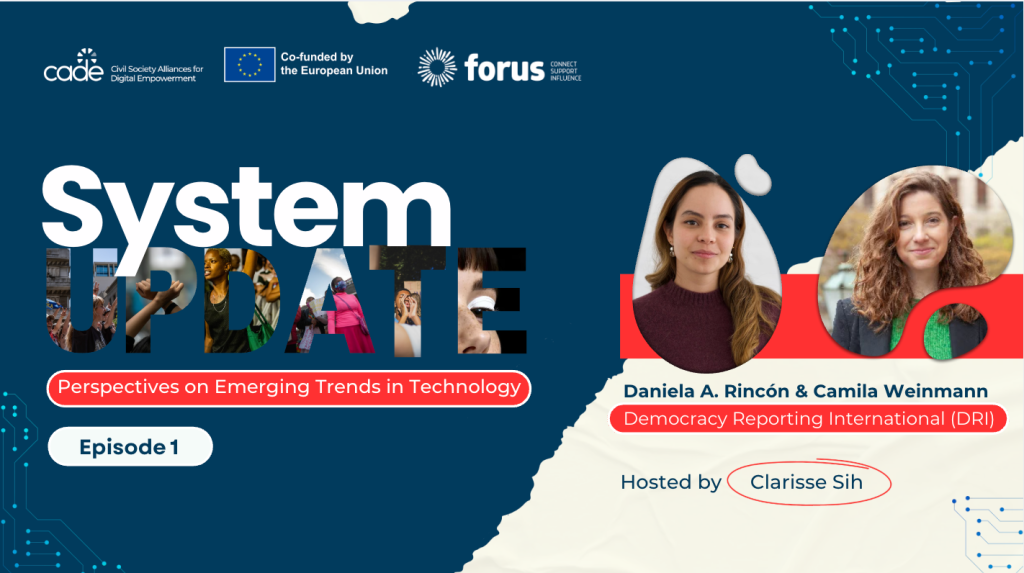
Diplo and Oxfam Ireland recently brought together civil society organisations and EU representatives in Brussels for a multistakeholder dialogue on digital inclusion and rights. The hybrid event, Partnering with civil society to advance digital inclusion and rights, explored practical experiences from the CADE and ReCIPE projects, and their connection to the EU’s Global Gateway agenda for digital transformation.
The dialogue featured contributions from the European Commission’s DG INTPA on evolving approaches to international digital governance, as well as presentations from CADE and ReCIPE partners on results achieved to date. Discussions centred on a consistent theme: the need to move beyond consultation towards genuine, sustained collaboration with civil society in digital policymaking, and to ensure that digital inclusion is understood not only as a technical challenge, but as a governance and human rights issue. Read the full recap
Civil society unpacks emerging technologies: A new interview series launches
What does it take to ensure civil society voices shape the story of digital technology – and not just respond to it?
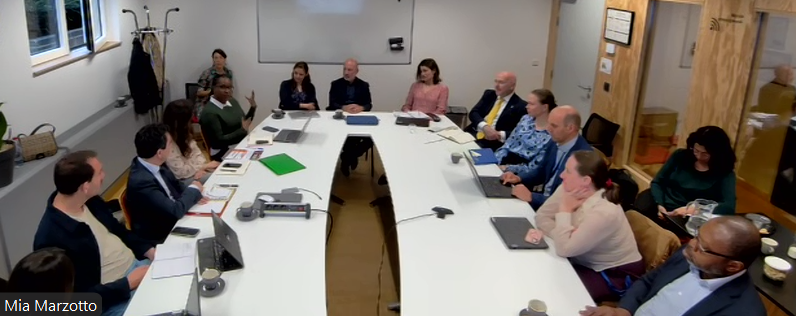
CADE partner Forus has launched System Update, a new interview series bringing together voices from across civil society, research, the private sector, and technical communities. From AI to digital infrastructure, the series explores how emerging technologies are reshaping civic space, participation, and power – and what solutions are needed to ensure they are developed and governed in ways that respect human rights and promote social justice.
The series is not just to watch: It is a space to contribute. Civil society actors, practitioners, and researchers are invited to share perspectives, propose topics, and help surface the issues that matter most in their contexts. If your organisation is working on emerging technologies and digital rights, this is an opportunity to bring those insights into a global conversation. Learn more and explore the series
Community-building takes root: Karisma opens its doors
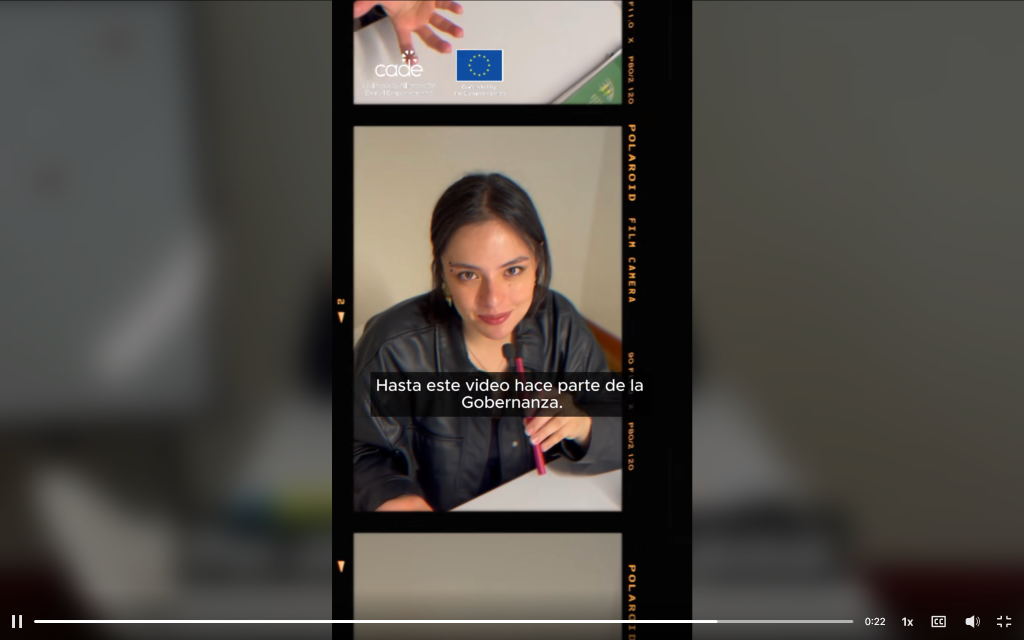
In May, Fundación Karisma hosted their first open house event, ¿Quiénes somos sin internet? / Who Are We Without the Internet? an opportunity to connect with their closest community and reflect together on their relationship with technology. The gathering, which took place in Bogota, Colombia, sparked laughter, shared experiences, and real insights into how people experience connectivity and digital rights in their everyday lives. It was the first in a planned series of community gatherings under their Café Internet project. Watch a short video from the event
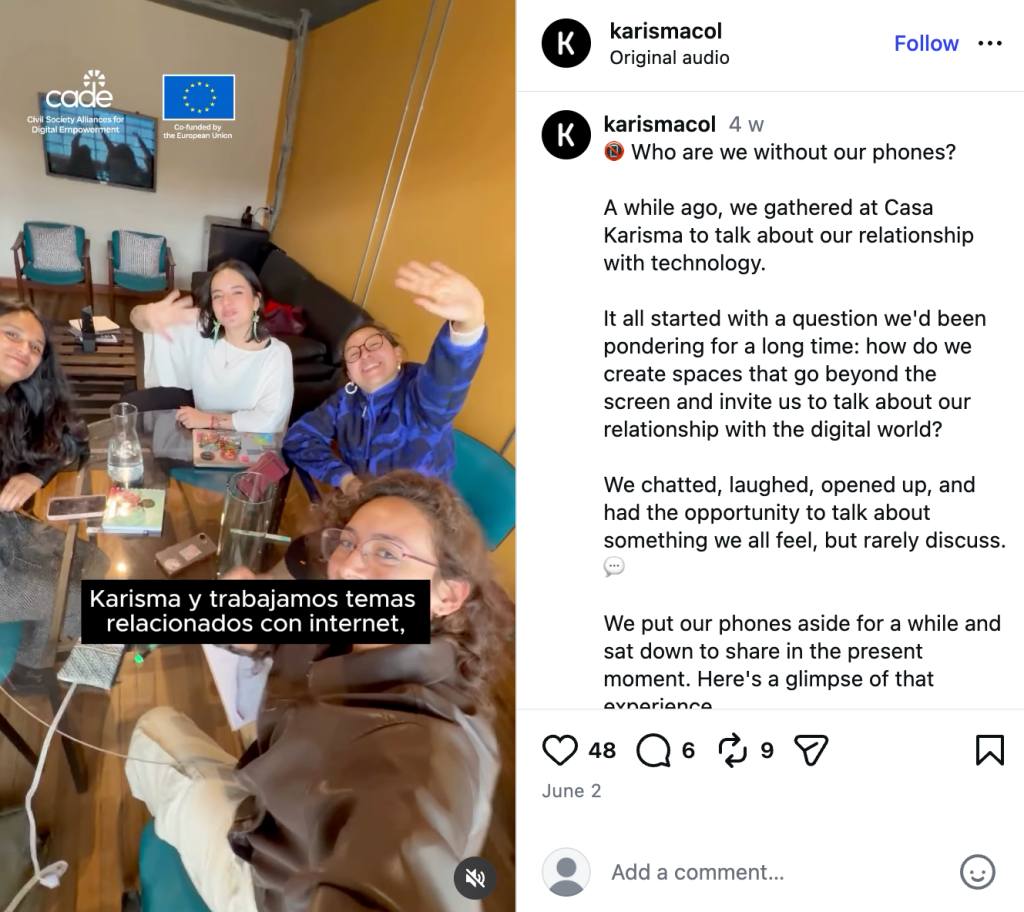
Karisma also travelled to Riohacha to share their work on service digitalisation with local communities, as part of broader efforts to bring their Internet Governance Training Programme guides to different regions of Colombia. ‘We believe it is essential to engage with communities across Colombia to foster conversations about internet access and rights online,’ the team shared. More updates from this experience coming soon.
A regional milestone: Sarvodaya completes Tier 1 digital literacy programme in South Asia
How do you build lasting digital literacy capacity across a region, and what does the next stage look like?
Sarvodaya has successfully completed the CADE Tier 1 Internet Governance-based Digital Literacy Fellowship Programme in South Asia, covering Sri Lanka and the Maldives. The programme marked an important step in expanding civil society capacity to engage meaningfully in internet governance conversations across the region.
Looking ahead, Sarvodaya will collaborate with Karisma to compare lessons learnt from the Tier 1 programmes in South Asia and Latin America, with a joint Lessons Learnt Report expected in December 2026. The Tier 2 Internet Governance-based Digital Literacy Programme for Youth in Sri Lanka is set to launch in July 2026, alongside a dedicated capacity building programme for civil society organisations working with young people with disabilities, to ensure meaningful participation in digital spaces.
Speaking up for digital rights: CIPESA submits UPR reports for Uganda and Zimbabwe
CADE partner CIPESA has been active on the advocacy front, working through one of the most structured mechanisms available to civil society in the human rights system.
Working in partnership with the Association for Progressive Communications (APC) and the Women of Uganda Network (WOUGNET), CIPESA is submitting two Universal Periodic Review reports for Uganda on 17 July 2026. The reports cover six thematic areas, including freedom of expression, digital connectivity and inclusion, data protection and privacy, and technology-facilitated gender-based violence.
CIPESA will also submit UPR reports for Zimbabwe in partnership with the Digital Rights Alliance Africa (DRAA) and Zimbabwe Human Rights Lawyers (ZHLR), alongside a broader consortium that includes the Cyrus R. Vance Center for International Justice, the Robert & Ethel Kennedy Human Rights Center, Amnesty International, and the Committee to Protect Journalists.
As part of the UPR process, submissions provide an independent, evidence-based perspective that complements state reporting and informs the recommendations raised during the review cycle. The reports bring current developments in digital rights firmly into the international accountability framework.
| 📚 RESOURCES |
Now in Portuguese: Karisma’s Navegantes da Internet training manual, a three-module guide to internet governance and digital citizenship for educators and communities across Latin America, is now available in Portuguese. Read

A Help Desk for CSOs? Yes, it’s now live: CSOs play a key role in shaping digital policy, but engaging in spaces like the Internet Governance Forum (IGF), ICANN, the IETF, or ITU is not always straightforward. CADE’s Help Desk offers practical, on-demand support through short, tailored one-on-one consultations with experienced practitioners, helping CSOs understand how these spaces work and how to engage more effectively. The service focuses in particular on organisations from the Global South. Submit a request
How can civil society turn IGF participation into real policy influence? CIPESA‘s report from the Digital Rights and Inclusion Forum (DRIF) makes the case for more strategic IGF engagement in West Africa, with evidence, alliances, and follow-up as the keys to lasting impact. Read
Internet governance explained, in plain language: CADE partner Karisma has published the third video in its internet governance explainer series, designed to make these complex processes more accessible to civil society audiences in Latin America. Watch it on LinkedIn or Instagram.
| 📅 COMING UP |
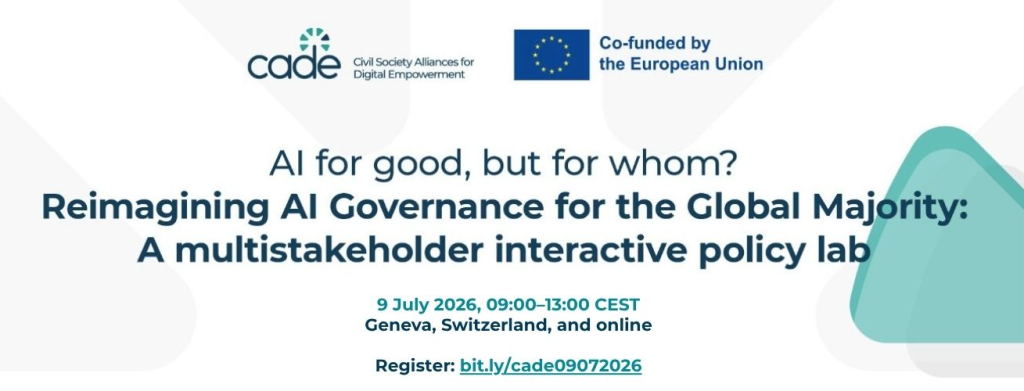
Join us in Geneva next week: AI for good, but for whom? Reimagining AI Governance for the Global Majority
RSVP by 6 July: https://zoom.us/meeting/register/7VjbaNZDT0CbvIZV7RBaNQ
We’re teaming up with the Arab Reform Initiative, the feminist collective Pollicy, the Women of Uganda Network (WOUGNET), Women in Internet Governance, and the Center for AI Ethics and Governance in Africa (CAIEGA), to organise a multistakeholder interactive policy lab as a side-event to the ITU’s AI for Good Summit and the WSIS Forum.
We invite you to co-create and test an AI regulation sandbox, hosted by Diplo in Geneva or online.
The AI for Good Global Summit celebrates the potential of artificial intelligence to serve humanity and advance the UN Sustainable Development Goals. Yet, the focus on efficiency gains, the acceleration of innovation, and how technological solutions obscure crucial power asymmetries, labour extraction, and democratic deficits embedded in AI systems. These dynamics are often codified in regulation and become difficult to reverse.
This side session, structured as an AI regulatory sandbox, convenes technologists, policymakers, civil society, trade union and labour representatives, legal specialists, and other specialists to reframe the global AI governance debate and draw on diverse experiences to tackle the questions facing us today. In the session, we centre justice as the fundamental test of whether AI truly serves humanity, using realistic scenarios to test governance structures and bring together varying – sometimes opposing – perspectives on regulation.
We ask: How do we build AI governance that redistributes power, protects human dignity, recognises labour, prevents harm and exploitation, and expands democratic agency, particularly in the Global Majority, where extractive AI value chains, informal economies, and diverse epistemic traditions are often erased from policy conversations?
Looking ahead: Key moments for digital rights and governance
👉 Global Dialogue on AI Governance – Inaugural Meeting
6–7 July, Geneva (and streamed): The newly established Global Dialogue on AI Governance holds its first meeting, bringing together governments and stakeholders to discuss international cooperation, share best practices, and advance open and inclusive conversations on AI governance. Learn more
👉 World Summit on the Information Society Forum 2026 (WSIS Forum 2026)
6–10 July, Geneva (and online): The annual multistakeholder gathering on digital cooperation and ICTs, taking stock of progress on the WSIS agenda. A key moment for digital governance advocates. Learn more
👉 AI for Good Global Summit 2026
7–10 July, Geneva (and online): The ITU’s flagship AI summit, co-convened with the Government of Switzerland and over 50 UN agencies, exploring the practical application of AI in advancing the Sustainable Development Goals. Learn more
👉 High-Level Political Forum on Sustainable Development (HLPF 2026)
7–16 July, New York: The UN’s central platform for reviewing progress on the 2030 Agenda, including a ministerial segment from 13–15 July. Learn more
👉 Human Rights Council – 62nd Session (HRC62)
Through 16 July, Geneva: The UN Human Rights Council’s regular session at the Palais des Nations, addressing the promotion and protection of human rights worldwide. Learn more
👉 IETF 126
18–24 July, Vienna (and remote): The Internet Engineering Task Force meets to develop and maintain the technical standards that underpin the functioning of the internet. Learn more
👉 Uganda Parliamentary IGF
27–30 July, Uganda: CIPESA and partners will engage with parliamentarians on internet governance priorities. Watch this space for updates
👉 Global Gathering
4–6 September, Estoril, Portugal: An in-person convening for civil society organisations, activists, researchers, and technologists working on digital rights and public interest issues. Learn more
👉 Forum on Internet Freedom in Africa (FIFAfrica26)
28 September–1 October, Mauritius: The 13th edition of this leading platform for digital rights and internet freedom in Africa, bringing together over 500 participants. Learn more
👉 Internet Governance Forum 2026 (IGF 2026)
14–18 December 2026, Nairobi (and online): The global digital policy community convenes in Nairobi, bringing together governments, civil society, the private sector, and the technical community to shape the future of the internet. Follow the updates
The CADE team will be at many of these events. Reach out on LinkedIn or by email to connect.
The Civil Society Alliances for Digital Empowerment (CADE) project is co-funded by the European Union. The views expressed in these initiatives are those of the authors and do not necessarily reflect the official position of the European Union. Contact us at cade@diplomacy.edu.