

Civil society must turn IGF participation into lasting digital policy influence in West Africa
At the Digital Rights and Inclusion Forum (DRIF), 14–17 April, CIPESA, under the Civil Society Alliances for Digital Empowerment (CADE) project co-funded by the EU, convened a timely peer-to-peer dialogue on how civil society organisations in West Africa can move beyond simply attending Internet Governance Forums (IGFs) to using them as spaces for agenda-setting, coalition-building, and sustained policy influence. The session, ‘Beyond the Microphone – Turning IGF Participation into Policy Influence in West Africa’, was moderated by Patricia Ainembabazi of CIPESA and brought together Arsene Tungali of Rudi International, Mojirayo Ogunlana-Nkanga, Principal Counsel at MON Legal and Kehinde Adegboyega of the Human Rights Journalists Network Nigeria. The discussion focused on practical experiences, failures, lessons, and strategies for making national and regional IGF processes more consequential for digital rights advocacy.
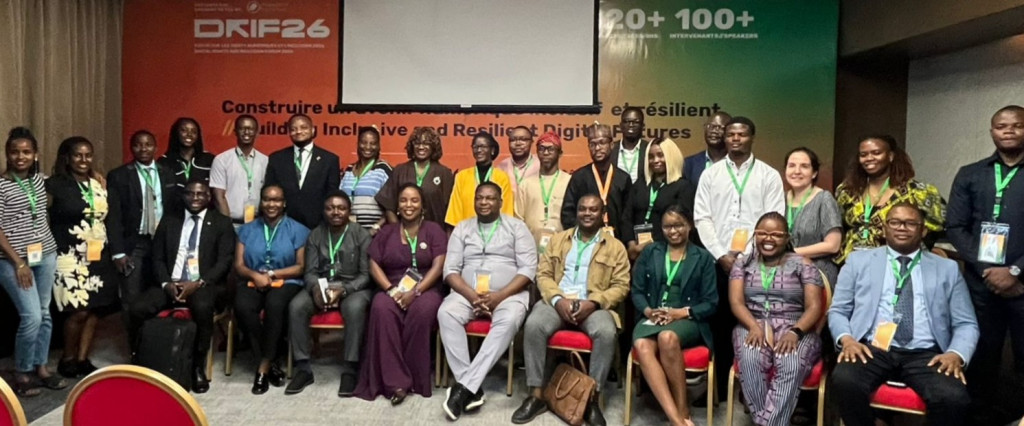
A group photo of the participants of CADE’s session, Beyond the Microphone: Turning IGF participation into policy influence in West Africa
Across West Africa, national and regional IGFs have become important convening spaces where governments, regulators, the private sector, technical actors, media, and civil society meet to discuss digital policy. Yet, as the session highlighted, participation does not automatically translate into influence. Many CSOs attend IGFs, make strong interventions, and return home without a clear follow-up strategy. The result is that critical issues such as internet shutdowns, surveillance, online gender-based violence, data governance, accessibility, and platform accountability often remain as conference talking points rather than becoming policy reform priorities.
Tungali, drawing from his experience with the African IGF process, reflected on the evolution of IGFs in Africa and the growing participation of West African actors. He noted that the value of IGFs lies not only in the annual meetings but in the processes that happen before and after them.
Strategic CSOs are those that prepare evidence, identify policy windows, build alliances, engage government actors early, and follow up with concrete proposals. (Tungali)
In his view, the difference between symbolic participation and policy influence is preparation, coordination, and continuity.
A key issue raised was language. Although West Africa includes Anglophone, Francophone, and Lusophone countries, many internet governance spaces still operate mainly in English, with limited interpretation or translation. This creates barriers for meaningful participation and can exclude organisations working in French, Portuguese, and local languages. The session underscored that inclusion in internet governance cannot be reduced to physical presence in the room. It must also include linguistic accessibility, deliberate outreach, and formats that allow diverse actors to contribute substantively.
Ogunlana-Nkanga brought a powerful legal advocacy perspective, drawing on her work around internet shutdown litigation before the Economic Community of West African States (ECOWAS) Court of Justice. Her reflections showed how IGF discussions can feed into legal and institutional accountability when CSOs document violations, build coalitions, and frame digital rights abuses as human rights violations. The ECOWAS Court has become a critical forum for challenging digital rights violations in the region. In the Togo internet shutdown case, the court found that shutting down the internet violated the right to freedom of expression. In the Nigerian Twitter blocking case, the court found that Nigeria’s blocking of Twitter violated freedom of expression and ordered the state to put in place a legal framework consistent with international human rights standards. The court has also addressed shutdowns in Guinea, where internet access was disrupted during politically sensitive periods.
These cases were a major highlight of the session because they demonstrated that advocacy does not end at the microphone.
A recommendation raised during an IGF can become a legal argument, a policy brief, a parliamentary submission, a media story, or a regional campaign. (Ogunlana-Nkanga)
Ogunlana-Nkanga emphasised that CSOs should approach IGFs with a clear theory of change: What issue are we raising? Who has the mandate to act? What evidence is needed? Which institution can be engaged? What follow-up mechanism will keep the issue alive after the forum?
Adegboyega added perspectives from the media fraternity, stressing that many digital rights concerns fail to reach the broader public because they are framed in technical or policy language that does not connect with lived realities. For media actors, the challenge is to translate internet governance debates into human stories. Internet shutdowns are not just technical disruptions; they affect journalists, traders, students, activists, women entrepreneurs, and ordinary citizens who rely on digital platforms for information, safety, livelihoods, and participation. Data protection is not only a legal compliance issue; it is about whether citizens can trust public and private digital systems with their personal information.
The session also explored the relationship between IGFs and wider struggles around civic space, freedom of expression, gender justice, and accountability. For women’s rights organisations, youth groups, disability rights advocates, and community-based organisations, IGFs can provide an entry point into digital policy processes that often appear distant or technical. However, these actors need support to engage effectively, including simplified policy briefings, coalition spaces, mentorship, and access to decision-makers.
This is where the CADE project’s contribution is significant. Through CADE, CIPESA has supported civil society actors in the Global South to engage in digital governance not as passive observers, but as agenda-setters and accountability actors. The project continues to help create spaces for peer learning, cross-regional exchange, and practical advocacy planning. In the West African context, this means supporting CSOs to treat IGFs as part of a wider advocacy cycle with evidence gathering, issue framing, coalition building, public communication, policy engagement, and accountability monitoring.
Several takeaways emerged from the discussion. First, CSOs should enter IGFs with clear advocacy objectives such as influencing policy and accountability, as well as strengthening multistakeholder collaboration, not only a general interest in participation. Second, digital rights issues must be linked to everyday concerns such as livelihoods, elections, education, safety, gender equality, and access to public services. Third, media engagement should be built into IGF strategies from the beginning, not treated as an afterthought. Involving journalists and media outlets in the Multistakeholder Advisory Group (MAG) will ensure that key themes are communicated effectively to the public from the start. Fourth, legal and policy advocacy should draw from discussions at IGFs to pursue concrete institutional outcomes, including regulatory engagement, legislative reform, litigation, and regional human rights mechanisms. Fifth, inclusion must be intentional, including mandating that all core documentation, especially that involving women’s rights organisations and youth movements, be translated to match audiences, particularly for Francophone and Lusophone actors, and that accessible versions be provided for persons with disabilities.
The action points were equally clear. CSOs should prepare joint position papers before IGFs and use them to engage governments, regulators, and parliamentarians. They should document commitments made during forums and track whether these commitments are implemented. They should create post-IGF advocacy plans with timelines, responsibilities, and target institutions. They should invest in storytelling and media partnerships to ensure that digital rights issues travel beyond policy rooms. They should also use regional mechanisms, including the ECOWAS Court, the African Commission on Human and Peoples’ Rights, and UPR processes, to escalate unresolved digital rights violations.
Ultimately, the session affirmed that IGFs remain valuable, but only when all stakeholders, and civil society in particular, treat them as governance processes rather than one-off events. For West African CSOs, our challenge is not only to speak at IGFs, but to convert participation into pressure, recommendations into reforms, and conversations into accountability. Through CADE, CIPESA continues to contribute to this shift by strengthening the capacity of Global South civil society to influence digital governance processes in ways that are inclusive, rights-respecting, and grounded in lived realities.
Patricia Ainembabazi (CIPESA)
The Civil Society Alliances for Digital Empowerment (CADE) project is co-funded by the European Union. The views expressed in this blog are those of the author and do not necessarily reflect the views of the European Union.
