27 April 2026, Brussels
Civil society organisations, digital policy experts, and EU representatives gathered in Brussels on 27 April 2026 for a multistakeholder dialogue on advancing digital inclusion and rights. The hybrid event, titled Partnering with civil society to advance digital inclusion and rights, explored practical examples from the ReCIPE and CADE projects linked to priorities under the EU’s Global Gateway agenda for digital transformation and the EU Civil Society Strategy.
The event was organised by Oxfam Ireland (lead coordinator ReCIPE) and DiploFoundation (lead coordinator of CADE), bringing together partners from both projects to exchange experiences and discuss practical approaches to rights-based digital governance.
Miguel Expósito Verdejo, Deputy Head of Unit for Digital Transformation at the European Commission’s DG INTPA, presented the EU’s evolving approach to international digital governance and digital rights, highlighting the need for partnerships, digital diplomacy, and multistakeholder engagement in shaping inclusive digital transformation.

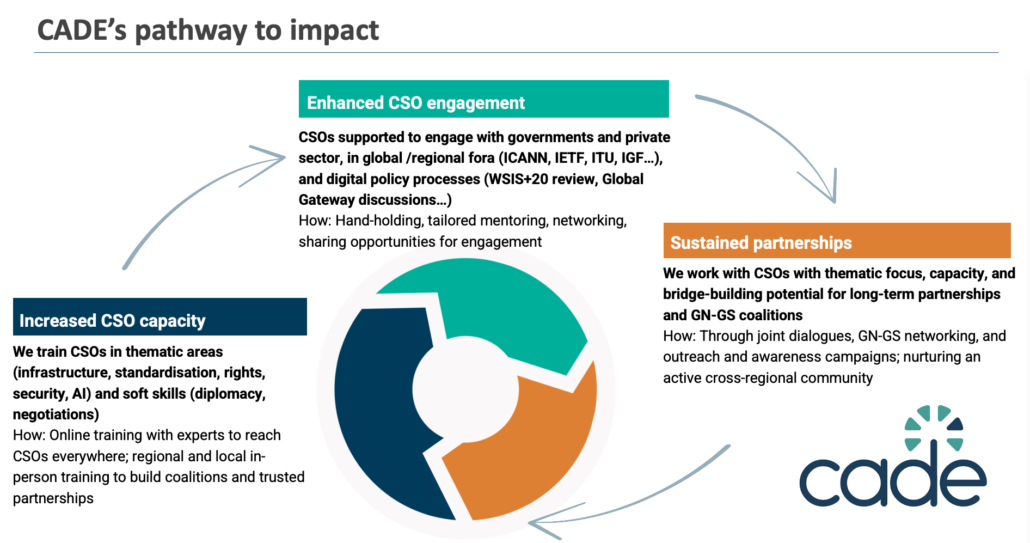
Interventions by Mia Marzotto (Oxfam) and Stephanie Borg Psaila (DiploFoundation) highlighted the impact achieved by the ReCIPE and CADE projects over the past two years. ReCIPE partners have trained more than 2,000 people in digital rights, security, and literacy skills, contributed to 41 national, regional, and international digital governance forums, produced 25 research outputs, and reached more than 900,000 people through awareness campaigns on digital rights and online safety. CADE partners have engaged 75 civil society organisations through global mapping and policy research initiatives, trained 60 CSOs through the CADE Capacity Development Programme, reached more than 26,000 users through the CADE Observatory, engaged over 1,700 stakeholders through peer-learning dialogues and regional forums, and expanded outreach through awareness campaigns and digital literacy activities across multiple regions.
Grace Naiserian of Mzalendo Trust presented lessons from the ReCIPE project’s work in Kenya, focusing on community-level digital literacy and digital rights training, engagement with policy processes such as the Digital Bill and the Malabo Convention, and initiatives aimed at improving access to public participation and information. The presentation also addressed ongoing challenges including affordability barriers, gender digital divides, online harms, surveillance risks, and shrinking civic space.
Patricia Ainembabazi of CIPESA discussed the importance of linking digital inclusion advocacy with accountability mechanisms such as the Universal Periodic Review (UPR), parliamentary forums, and regional internet governance spaces. Discussions throughout the event stressed that issues such as internet shutdowns, online safety, platform accountability, and unequal access to digital services must be treated not only as technical concerns, but also as governance and human rights issues requiring sustained policy engagement.
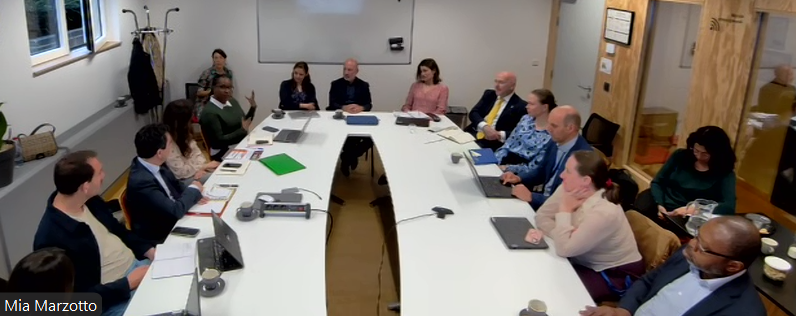
A recurring theme across the dialogue was the need to move beyond consultation towards more meaningful collaboration with civil society in digital policymaking processes, and the growing need to connect digital inclusion with accountability mechanisms such as parliamentary forums, regional policy platforms, and the UPR process.
A key outcome of the meeting was stronger alignment between CADE and ReCIPE partners around a shared agenda focused on digital inclusion, civic space, data protection, online safety, and rights-respecting digital governance. The discussions reinforced the importance of ensuring that perspectives from the Global South are meaningfully represented in international digital policy debates.