
In focus
Geneva AI Week: Did meaningful engagement improve mere tokenism?
By Raymond Amumpaire August, 2026 From 07–10 July 2026, Geneva, Switzerland, saw a convergence of conversations for civil society and governments on global AI governance, from the inaugural UN Global Dialogue on AI (UNGD), a mechanism established by the Global Digital Compact, to the World Summit on the Information Society (WSIS) and the International Telecommunications [...]... (See more)
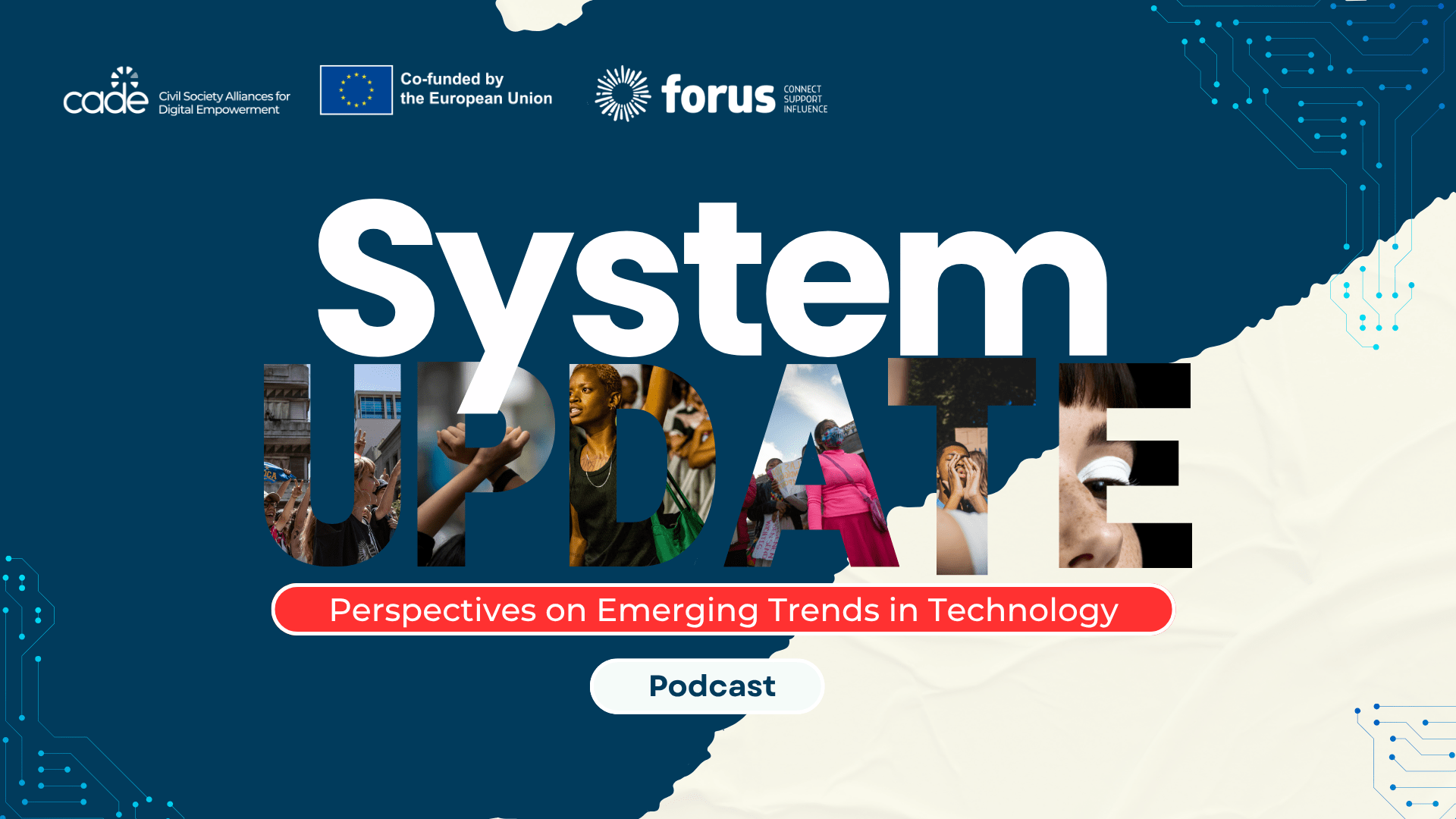
System Update: A New Podcast Series Exploring Emerging Trends in Technology is Out!
From elections and public services to online platforms and access to information, digital technologies are reshaping our democracies, economies, collective and private existences at an unprecedented pace. Yet one critical question remains: who gets to shape the rules that govern these technologies? To help answer that question and trigger new forms of collaboration, Forus is launching System Update, a new 12-episode podcast series [...]... (See more)

Understand before you agree!
The story behind LexiRate: From a scholarship opportunity to building digital freedom By: Derrick Wesley Otieno – LexiRate’s Visionary In December 2025, I travelled home for the holidays with little expectation that the weeks ahead would completely reshape my perspective on technology, digital rights, and innovation. Earlier that year, I had applied for a scholarship [...]... (See more)

Digital Rights Exchange Program
Apply for the Digital Rights Exchange Programme: A Unique In-Person Global North–Global South Opportunity Internet governance and digital rights play out differently across regions, shaped by power imbalances, concentrated market actors, uneven infrastructure, and shifting policy environments. Yet many of the most pressing challenges require learning that goes beyond borders and turns shared problems into coordinated advocacy: surveillance pressures, platform [...]... (See more)
Capacity Development Programme for CSOs 2026-2027
Empowering civil society to shape digital policy The Civil Society Alliances for Digital Empowerment (CADE) is strengthening the ability of civil society organisations (CSOs) – especially those from the Global South – to play a stronger role in shaping digital policy. The programme, developed and delivered by DiploFoundation, guides participants through a practical, step-by-step learning journey [...]... (See more)
Civil society must turn IGF participation into lasting digital policy influence in West Africa
At the Digital Rights and Inclusion Forum (DRIF), 14–17 April, CIPESA, under the Civil Society Alliances for Digital Empowerment (CADE) project co-funded by the EU, convened a timely peer-to-peer dialogue on how civil society organisations in West Africa can move beyond simply attending Internet Governance Forums (IGFs) to using them as spaces for agenda-setting, coalition-building, [...]... (See more)

New interview series: Civil society unpacking burning issues with emerging technologies
From artificial intelligence to digital infrastructure, digital developments raise critical questions about human rights, environmental sustainability, democratic governance, and digital inclusion. To contribute to these conversations, Forus is launching a new interview series under the Civil Society Alliances for Digital Empowerment (CADE) project co- funded by the European Union, highlighting diverse perspectives on some of [...]... (See more)

Beyond connectivity: The apomechanic web and digital exclusion by design
By Dr Muhammad Shabbir Digital accessibility for persons with disabilities is not charity, decoration, or technical polish. It is a condition for equal participation. But the larger failure is not limited to awareness. It lies in a persistent confusion that weakens digital policy: the belief that ‘internet access’ and ‘digital accessibility’ mean the same thing. [...]... (See more)
Automated exclusion: The crisis of inaccessible AI for persons with disabilities
In the global rush to regulate Artificial Intelligence, a dangerous consensus seemingly has formed: that the real drama of AI lies in the future – in existential risks, deepfakes, or algorithmic bias. But for persons with disabilities, the crisis of AI is already here, and it is older than the technology itself. It is the story of [...]... (See more)
ECNL publications: Practical guidance for CSOs on how to engage with key global digital policy processes and standardisation bodies
European Center for Not-for-Profit Law (ECNL) has published two sets of publications as part of the Civil Society Alliances for Digital Empowerment (CADE) initiative, designed to help civil society navigate global digital governance more effectively. The first publication, titled ‘Navigating key global digital governance processes: Practical handbook for civil society organisations’ is a handbook that [...]... (See more)
Posts per page:
