CADE Newsletter – March/April 2026
⭐IN FOCUS
The shift to AI-driven systems is often framed as progress. But progress for whom, and on what terms?
Dr Muhammad Shabbir, a researcher and digital rights advocate, currently participating in CADE’s Capacity Development Programme for CSOs run by DiploFoundation, has examined the deeper structural issues shaping accessibility in AI systems.
Drawing on his own experience as a blind professional and his work as Coordinator of the IGF Dynamic Coalition on Accessibility and Disability (DCAD), Shabbir argues that digital exclusion is being quietly hard-coded into the infrastructure of AI systems through procurement choices, default settings and inaccessible design. From broken screen reader workflows to visual-only identity verification, he explains how systems marketed as modern and efficient routinely lock out persons with disabilities – not by accident, but by design.
His central argument is meaningful: ‘Accessibility is not charity; it is legitimacy’. If the participatory layer of digital governance is inaccessible, the framework governing it lacks the moral authority to lead.
Read the full article on CADE’s website.
🌍 UPDATES
From exchange to coordination: Digital Governance Working Group kicks off
What happens when CSOs working across regions step out of parallel tracks and into a shared space?
On 4 March, CADE partner Forus brought together CSOs working across digital governance, civic tech, and digital rights for the first session of the newly formed Digital Governance Working Group. The online exchange, held with simultaneous interpretation in English, French, and Spanish, focused on a practical question: Where are the real opportunities for collaboration?
Participants mapped ongoing initiatives, highlighted organisational strengths, and identified priority areas for Global North–Global South joint action in 2026. But the session was not designed as a one-off conversation. It marked the starting point of a longer process, one aimed at moving from exchange to coordination, and from coordination to concrete partnerships.
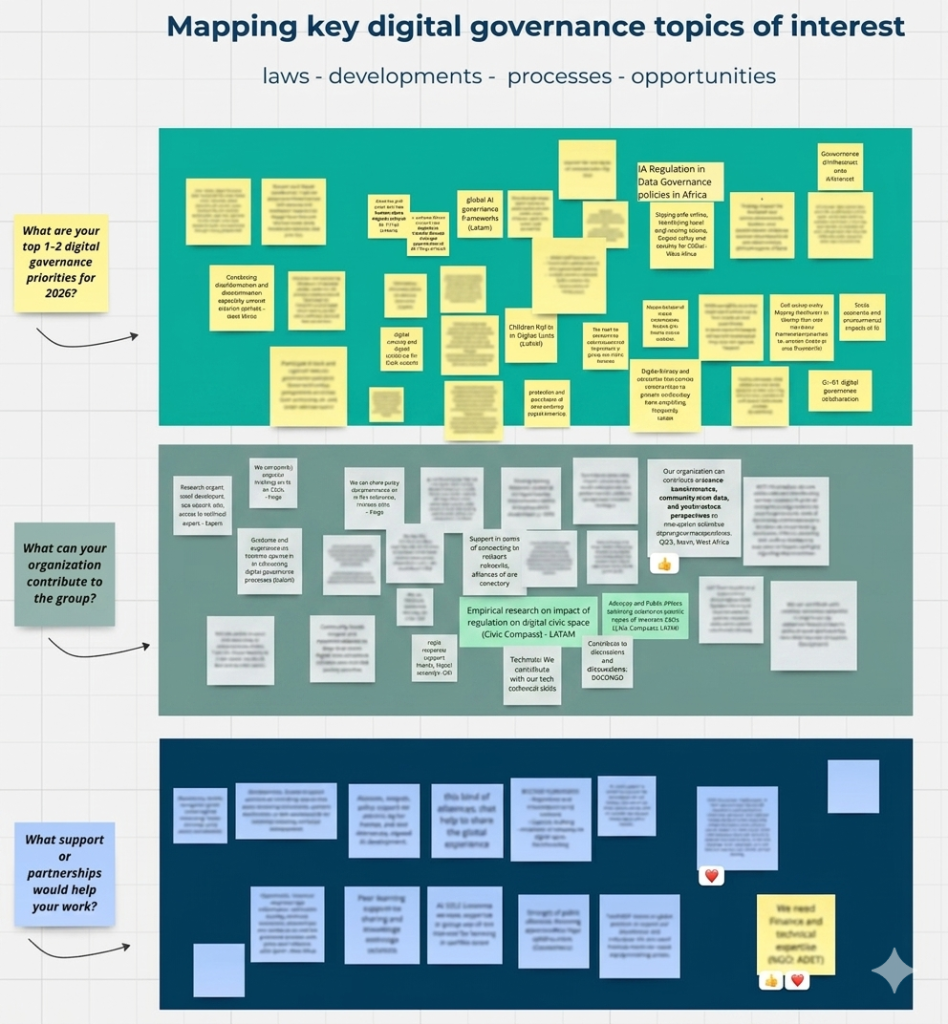
The working group is part of CADE’s broader commitment to fostering sustained, cross-regional collaboration among civil society actors engaged in digital policy. To be part of the working group, write to us at cade@diplomacy.edu; you can also join our mailing list to stay informed about next steps.
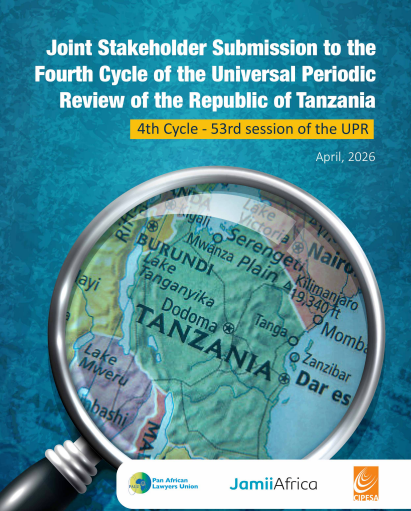
Tanzania’s digital rights context enters the UPR process
How do national digital realities translate into global human rights review?
On 10 April 2026, CIPESA, together with partners, submitted a stakeholder report to the Universal Periodic Review (UPR) of Tanzania, bringing current digital rights developments into focus.
The submission situates recent policy and technological developments within a context where restrictions on online expression, pressure on digital civic space and expanding surveillance practices continue to shape how people access information and participate online. It also highlights how regulatory frameworks on online content and platforms influence who can speak and organise, particularly in politically sensitive moments such as elections.
As part of the UPR process, such submissions provide an independent, evidence-based perspective that complements state reporting and informs the questions and recommendations raised during the review cycle. Read the full UPR submission here.
From participation to influence: CADE at DRIF 2026
What does it take for civil society participation to translate into real policy influence?
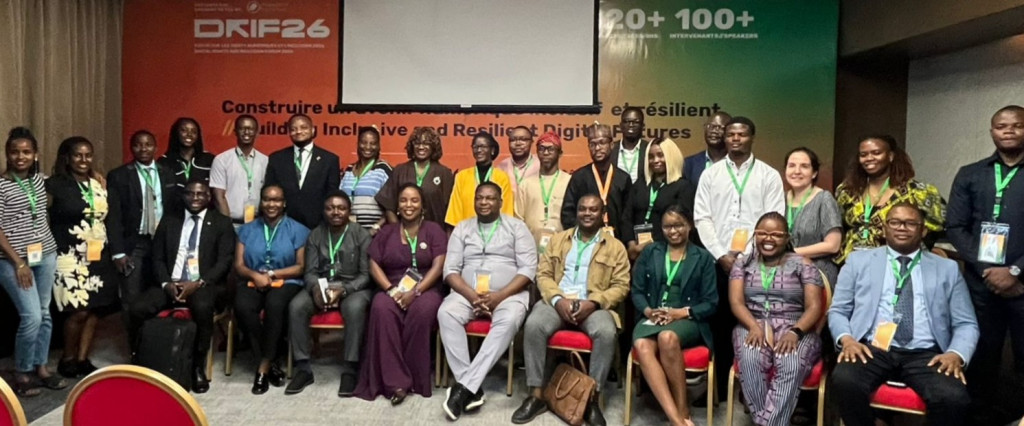
At the Digital Rights and Inclusion Forum (DRIF 2026), held in Abidjan on 14–16 April, this question ran through both the broader programme and CADE’s contribution to it. Bringing together policymakers, civil society, technologists and researchers from across the Global South, the forum created space to examine not just what is discussed in digital governance spaces, but how those discussions shape outcomes.
Under the CADE project, CIPESA convened a session titled ‘Beyond the Microphone: Turning IGF participation into policy influence in West Africa’. The exchange focused on a familiar challenge: Participation alone is not enough. Civil society actors reflected on how engagement in national and regional Internet Governance Forums (IGFs) can move beyond visibility towards more strategic, sustained and policy-oriented action.
Across the forum, similar themes emerged. Data access was framed not only as a technical issue, but as a civic and human rights concern. Participants pointed to the gap between existing legal frameworks and lived realities, and to the need to centre marginalised communities, particularly women’s organisations, in both policy design and implementation. The discussions also moved beyond policy language to conversations on collaboration, credibility and mental health. Taken together, DRIF 2026 reinforced a clear message: participation matters, but influence is what ultimately shapes outcomes.
Kenya School of Internet Governance (KeSIG) 2026 kicks off
The 11th edition of the Kenya School of Internet Governance (KeSIG) is now underway, running online till 15 May 2026.
Organised by KICTANet, KeSIG has grown into a flagship initiative introducing participants from across civil society, academia, government, media and the tech community to the core concepts and processes shaping internet governance. Since moving online, the programme has expanded significantly, reaching 100 participants annually and continuing to broaden the base of African voices engaged in digital policy discussions.
For those not part of this year’s cohort, KeSIG runs annually and remains one of the most accessible entry points into internet governance for civil society across Kenya and the wider region.

A Help Desk for CSOs? Yes, it’s now live
CSOs play a key role in shaping digital policy, but engaging in spaces like the IGF, ICANN, the IETF or ITU is not
always straightforward. Processes are technical, entry points are unclear, and participation often requires time and expertise that many organisations do not have
CADE’s Help Desk is designed to make that first step easier. It offers practical, on-demand support through short, tailored one-on-one consultations with experienced practitioners, helping CSOs understand how these spaces work and how to engage more effectively.
The service focuses in particular on organisations from the Global South, where barriers to participation remain highest. Whether it is preparing a contribution, identifying the right forum, or navigating procedures, the aim is simple: to turn interest into informed, strategic engagement.
If your organisation is looking to engage in digital governance processes, submit a request through the CADE website and we will connect you with the right expert.
📅 COMING UP

Meet us at RightsCon 2026!
What does it take to turn participation into influence in digital governance spaces? This question will be front and centre as CADE joins this year’s summit in Lusaka and online from 5–8 May. Register here to attend in-person or online.
CADE will host two sessions designed not just to exchange perspectives, but to move towards coordination and action:
👉 5 May (Day 0, in person): From digital authoritarianism to collective action
A three-hour interactive workshop that brings together civil society and donors from the Global South and the Global North. The focus: how to respond to internet shutdowns, surveillance, and shrinking civic space through more coordinated advocacy and longer-term partnerships. The session will result in a shared advocacy snapshot to guide joint work beyond RightsCon.
- Time: 07:00–10:30 UTC
- Room: A115 (Kenneth Kaunda Wing)
👉 8 May (Day 3, hybrid): From the margins to the table
This session looks at a persistent barrier: why civil society struggles to access technical governance spaces such as ICANN, IETF, and ITU, and what can be done about it. Expect practical strategies, from coalition building to regional hubs, aimed at strengthening sustained engagement.
- Time: 12:00–13:00 UTC
- Room: A101
Will you be there? Reach out to the CADE team on LinkedIn or by email to connect. We’d love to hear from you!
New multimedia series: Civil society perspectives on emerging technologies
What are the issues shaping civil society engagement with emerging technologies, and who gets to define them?
CADE partner Forus is launching a new interview series bringing together voices from across civil society, research, the private sector, and technical communities. From artificial intelligence to digital infrastructure, the series explores how emerging technologies are reshaping civic space, participation, and power.
Get involved: This series is not just to watch – it is a space to contribute. Civil society actors, practitioners, and researchers are invited to share perspectives, propose topics, and help surface the issues that matter most in their contexts. If your organisation is working on emerging technologies and digital rights, this is an opportunity to bring those insights into a global conversation and ensure they inform broader debates and agendas.
Looking ahead: Key moments for digital rights and governance
👉 World Summit on the Information Society Forum 2026 (WSIS Forum 2026)
July 2026, Geneva: A key global platform convening governments, civil society, the private sector, and international organisations to assess progress on digital cooperation and the WSIS agenda. Learn more.
👉 Forum on Internet Freedom in Africa 2026 (FIFAfrica26)
28 September – 1 October 2026, Mauritius: A leading platform advancing conversations on digital rights, inclusion, and governance across Africa. Get engaged.
👉 Internet Governance Forum 2026 (IGF 2026)
14–18 December 2026, Nairobi: The global digital policy community convenes in Nairobi, bringing together governments, civil society, the private sector, and the technical community to shape the future of the internet. Follow the updates.
The CADE team will be there. Reach out to the CADE team on LinkedIn or by email to connect.
🏘️ COMMUNITY
Internet Society Foundation: Applications open for the new Community-Centered Connectivity Grant Program
Applications are now open for the Community-Centered Connectivity Grant Program. The Internet Society supports organisations building locally driven connectivity solutions to expand affordable, reliable internet access in digitally excluded communities. There are two funding tracks: Catalyst, up to USD $50,000, and Scaling, up to USD $200,000. Learn more.
𝗙𝗿𝗲𝗲𝗱𝗼𝗺 𝗢𝗻𝗹𝗶𝗻𝗲 𝗖𝗼𝗮𝗹𝗶𝘁𝗶𝗼𝗻: Applications open for the 𝟮𝟬𝟮𝟲–𝟮𝟬𝟮𝟴 𝗔𝗱𝘃𝗶𝘀𝗼𝗿𝘆 𝗡𝗲𝘁𝘄𝗼𝗿𝗸
The Freedom Online Coalition (FOC) has launched an open call for applications for the next cohort of the FOC Advisory Network. The advisory network is a key part of FOC’s multistakeholder approach, bringing together diverse voices and expertise from across regions and stakeholder groups to support and shape the FOC’s work towards an open, free, and rights-respecting internet. Members of the advisory network contribute insights and expertise that inform the coalition’s priorities and strengthen its global impact. Learn more.
The Civil Society Alliances for Digital Empowerment (CADE) project is co-funded by the European Union. The views expressed in these initiatives are those of the authors and do not necessarily reflect the official position of the European Union. Contact us at cade@diplomacy.edu.